Get Involved Store Primary Aug 18 · Vote for one
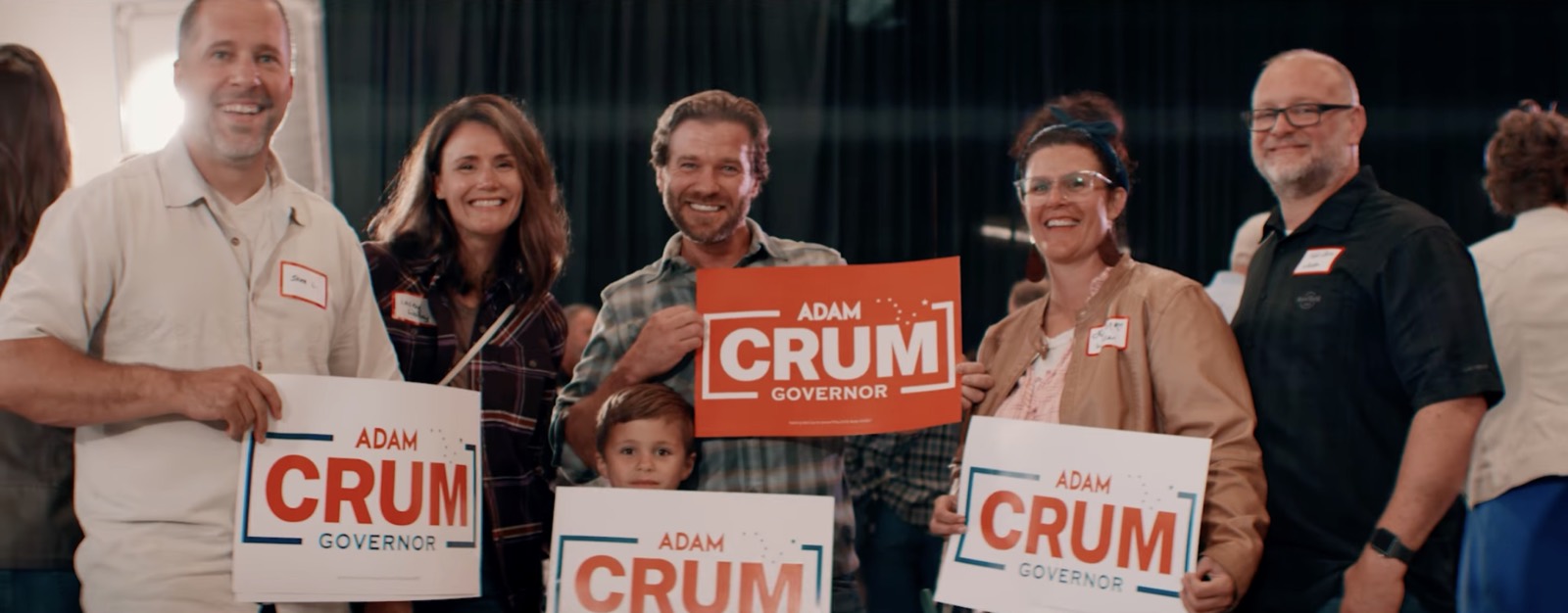
Alaskans holding Adam Crum for Governor signs

Who is Adam Crum?

I'm Adam Crum, a Republican candidate for Governor of Alaska in the August 18, 2026 primary. I'm running because Alaska is rationing abundance: 35 trillion cubic feet of known gas on the North Slope, and yet the Railbelt is headed toward an energy crisis. We have 49 of the 50 critical minerals and rare earths, and yet the United States has a supply chain crisis. We need to unlock Alaska's energy and mineral potential. That will open up our economy and give our kids and families the opportunities they need to thrive in our state.

35 trillion cubic feet of known gas on the North Slope

  • Alaskan born and raised
  • Business owner Northern Industrial Training
  • Reformer Health and Revenue Commissioner
  • Family Proud husband and father

I'm a businessman. I helped build Northern Industrial Training, the largest postsecondary trade school in the state, putting people to work across multiple industries. I also served as Alaska's Commissioner of Health and Social Services and Commissioner of Revenue. I know the private sector, I've led large state agencies, and I know the problems inside government that can be fixed to better serve Alaskans.

Rationing an abundance

Your heating bill went up. Your groceries went up. Somebody you know has left Alaska in the last three years, or is talking about it.

Meanwhile: thirty-five trillion cubic feet of known gas sits mapped on the North Slope, Southcentral is running short of gas, and the current plan is a boat—imported gas, somebody else's, landed in a state with more energy per person than almost anywhere on earth.

We are rationing an abundance. That is the whole problem in three words, and it is the kind of problem that has an answer.

What follows is who I am and why I want the job while that gets fixed.

The cabin

My dad was a Haul Road trucker who got hurt at work in the mid-80s. We had to sell everything and moved into a two-bedroom dry cabin in Anchor Point. We hauled water from a spring, had a boat porta-potty in the house, and used a pitcher of water heated on the stove for showers. A family of seven in a small space, we ate a lot of pancakes, drank powdered milk, and had to put a tent up in the backyard when friends came over.

As Dad got healthy, he turned the whole family into a work crew—kids on chainsaws clearing trees and turning over gravel. We would build a house and sell it, then move to another lot and do it again. A lot of Alaskans have a version of this story. I tell it because it is why I believe a thing that hasn't been built yet can still get built.

Football, and coming home

I graduated from Homer High, then I bet on myself and took a walk-on spot on the football team at Northwestern University. I earned a full ride within a year and then started two years on the offensive line next to players who were seven inches taller than me.

A Stanford coach once told me that being first-team All-State in Alaska is like being third-team All-City in LA. He wasn't being unkind. He was being accurate, and it is a fair summary of what Alaskans are up against: we are small, we are far away, and neither of those is a reason to accept less.

When my career was over, I couldn't wait to come home. That's the part I care about, because since 2014 far too many people have made the other choice and left.
Northern Industrial Training

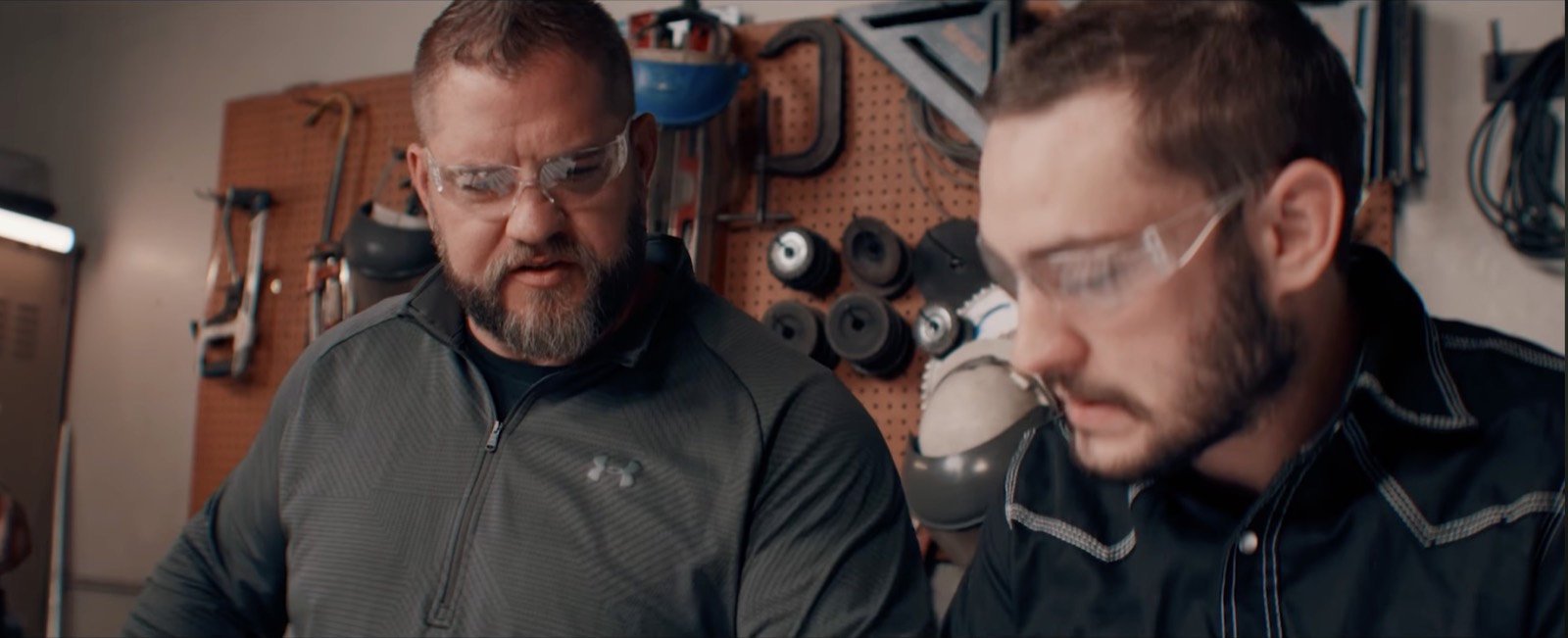
My family built Northern Industrial Training. It's most famous for training Alaskans to be truck drivers, welders, and mechanics. I built the corporate services side and worked on contracts with Exxon, Shell, and Alyeska Pipeline.

I have trained Alaskans with the necessary skills to go make an incredible living. I have seen with my own eyes how learning to work with your hands changes people's lives. They have a purpose. They know the dignity of work. And they now know how to provide for their families.

Alaskans training in a welding shop
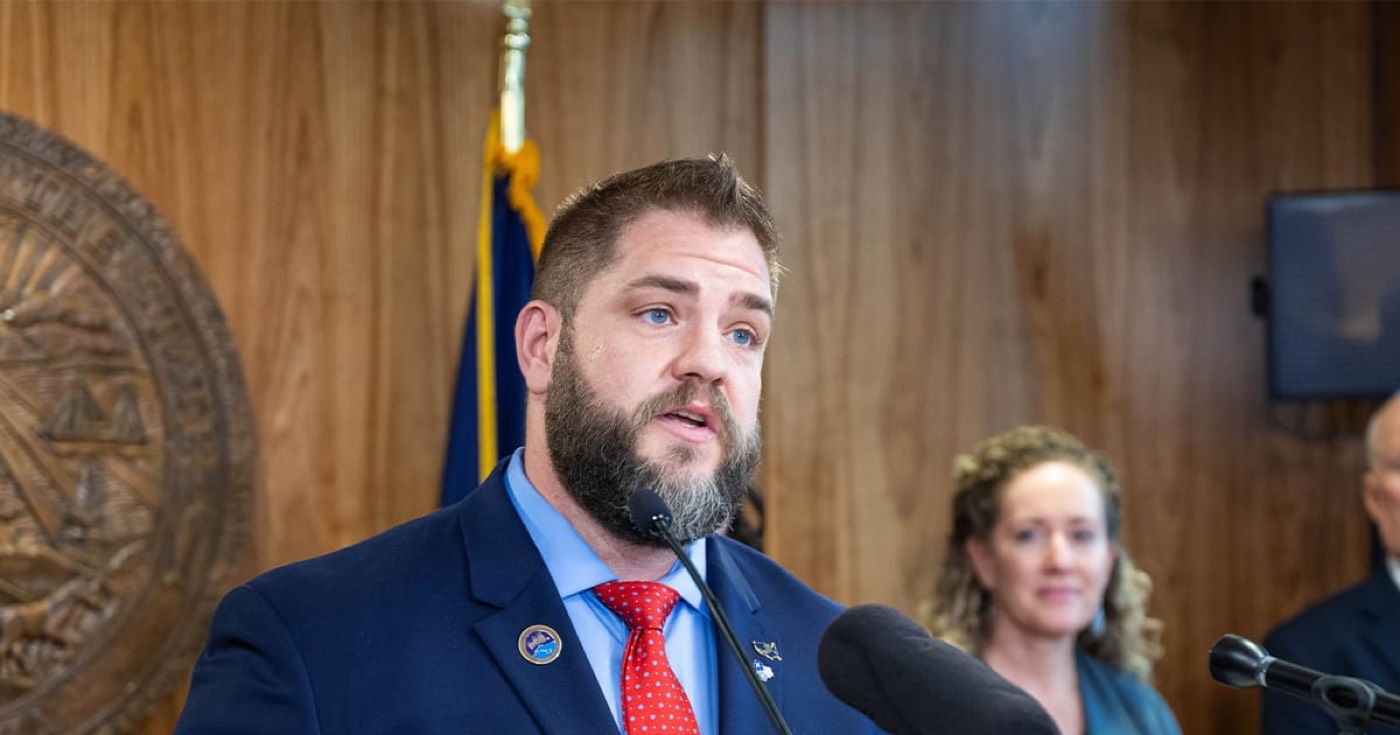
Adam Crum speaking at a podium in Alaska

Two departments

I ran the Department of Health and Social Services from 2018 through 2022, leading the state through COVID. We kept the oil fields pumping, the fishing fleets running, and brought the cruise ships back. We never had statewide mask or vaccine mandates.

At the end of 2022, I stepped over and ran the Department of Revenue, collecting the state's taxes and investing its money. I became vice chair of the Alaska Permanent Fund Corporation Board of Trustees, and I was national vice chair of the State Financial Officers Foundation, where we took the fight against woke policies directly to the big banks. And we won.

What I think happens next

Everything above points at one thing, and it isn't a policy paper. It's a bet about the next twenty years.

The world is reorganizing itself around energy. Manufacturing is coming back onshore and it needs power. Artificial intelligence has turned into a contest between nations and it needs power on a scale that is hard to describe to anyone who hasn't looked at the numbers. Every country serious about the next century is standing in the same line for the same thing.

Alaska has more of it per person than almost anywhere on earth.

Here is the part I don't think Alaskans have been told plainly enough. For most of my life the story about this state was that we're remote and expensive and that is simply the arrangement—far from the markets, far from the factories, far from where things get decided. That was true. It is about to stop being true, because when the thing the world wants most is the thing under your feet, distance stops being the point.

We are not a state that got unlucky. We are a state sitting on exactly what the world is about to compete over, rationing an abundance to our own houses while we wait on a boat to bring us somebody else's.

Build the power here. Keep it affordable here. Make the jobs Alaskan. Own the thing rather than rent it out. That is a decision a person makes, and it gets made by whoever is in the chair when the terms are written. That is the job I'm asking for.

The record, short

BornHomer, Alaska. Raised in Anchor Point on the Kenai Peninsula.
EducationHomer High School, then Northwestern University. Master's in public health, Johns Hopkins.
BusinessNorthern Industrial Training—truck driving, welding, mechanics, and corporate services.
2018–2022Commissioner, Alaska Department of Health and Social Services.
2022–2025Commissioner, Alaska Department of Revenue.
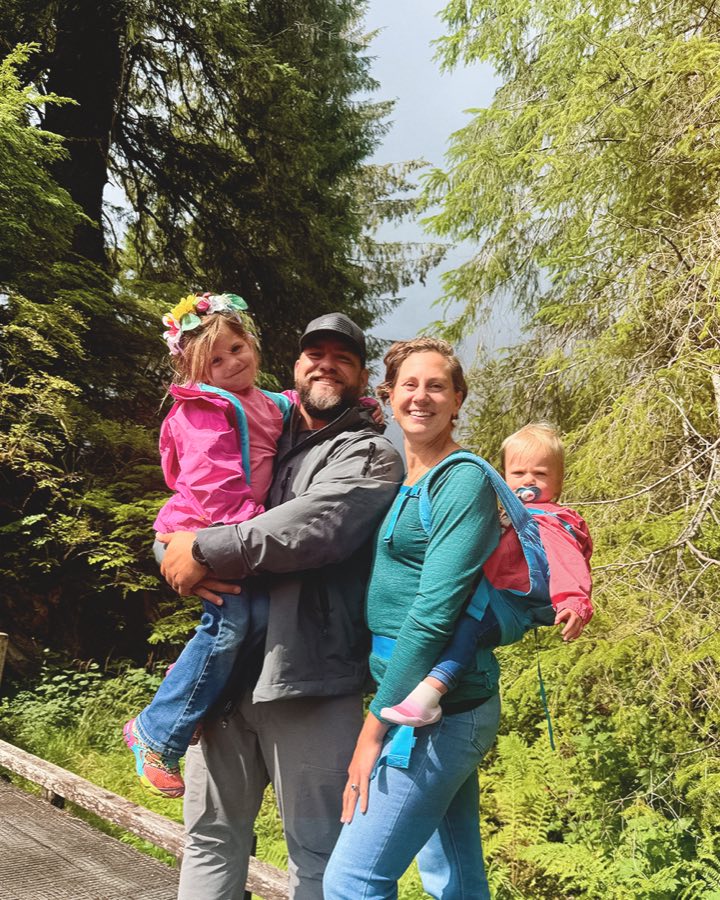
FamilyWife Colleen, two daughters. They live in Wasilla.
Running mateBob Craig, CEO of the Alaska Heart & Vascular Institute.

Colleen, and the two of them

We're raising our daughters in Wasilla. Lucy and Ellie are the reason I care what this state costs in twenty years, not just what it costs this winter.

One of them put a bracelet on my wrist before I left for a trip and told me not to forget it. I still wear it. That's roughly the whole argument for why I'm doing this.

Adam and Colleen Crum with their daughters in Alaska

Why I'm running

Thirteen straight years now, more people have left this state than moved to it. About 57,000 of us, net.

Those aren't statistics to me. They're the kids my daughters went to school with. People leave because they can't afford to stay, and nearly all of it traces back to energy—to a connection between where Alaska's gas is and where Alaskans live that we have spent forty years almost building.

I've seen the file. There is no engineering mystery in it and there never was. What's in the file is meetings.

A thing that wasn't built can be built. Alaska's best years are not the ones behind it, and I would like to be useful while we prove that.

If you want to know how I think

The writing is a better test than a biography. I explain something that's costing Alaskans money, about once a week, and the explanation comes first.

Or just read it here →

Get the free read Donate